
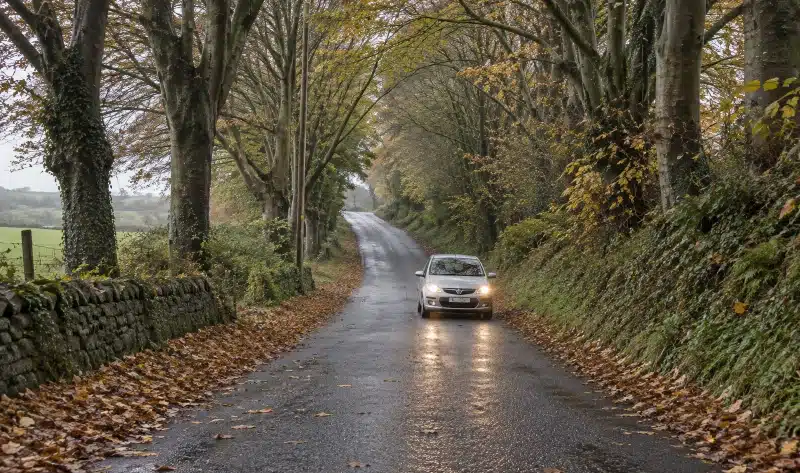
Autumn is when Northern Ireland's back roads look their best. The hedges turn gold, the trees close over the lanes and the low sun catches everything. It's also when those same roads start to catch drivers out.
Wet leaves, fog in the hollows, tractors round every second bend and a sun so low it blinds you at half eight in the morning. Here's what to look out for on rural roads this autumn, and how to handle it.
Wet leaves are slippier than they look
Fallen leaves look harmless, but once they're wet they form a slick layer that cuts your grip and increases your stopping distance. They also hide potholes, drains and the road edge. The worst spots are tree-lined bends, where leaves pile up and the road stays damp all day.
What to do
- Slow down before bends and under trees, not in them.
- Leave extra space between you and the car in front.
- Brake gently and early, and avoid sudden steering.
Low sun, fog and early darkness
Autumn mornings often start with fog sitting in the valleys. By the commute home, the sun is low enough to blind you on a straight road, and the evenings get darker every week.
The Highway Code for Northern Ireland says you must use headlights when visibility is seriously reduced, generally when you can't see more than 100 metres.
What to do
- Switch your headlights on in fog and poor light, and use fog lights only when visibility is seriously reduced.
- Keep your windscreen clean inside and out. Low sun on a dirty screen can leave you seeing almost nothing.
- Keep sunglasses in the car and slow right down if you're dazzled.
Animals on the road
Deer are more active in autumn, particularly around dawn and dusk, and rural roads also see foxes, badgers and the odd escaped cow or sheep. Hitting an animal, or swerving to avoid one, can cause a serious accident.
What to do
- Take extra care where you see animal warning signs, especially near woodland.
- On unlit roads at night, use full beam to spot animals sooner, and dip your lights for oncoming traffic.
- If an animal steps out, brake firmly in a straight line. Swerving can put you into a ditch or oncoming traffic.
Tractors and farm machinery
Autumn is a busy time on farms, and tractors, trailers and harvesters are a common sight on country roads. They're slow, wide and often carrying mud on to the road behind them.
What to do
- Be patient. Only overtake when you can see far enough ahead to do it safely.
- Watch for indicators and hand signals from the driver, and for farm entrances.
- Hang back far enough that the driver can see you in their mirrors.
Sudden rain and strong winds
Northern Ireland's autumn weather can change in minutes. A dry road can turn to standing water after one heavy shower, and gusts on exposed roads can push a car sideways.
What to do
- Check the forecast before longer journeys.
- Slow down in heavy rain, and hold the wheel firmly on exposed stretches and bridges.
- Check your tyres. The legal minimum tread is 1.6mm, but grip drops well before that.
If someone else caused your accident
Bad weather and wet leaves don't take away a driver's responsibility to drive to the conditions. If you were injured because another driver was going too fast for the road, or because livestock got out onto the road through a farmer's neglect, you may be able to claim. Whether you can depends on what happened and the evidence available.
Paschal O'Hare Solicitors has helped people injured in road accidents across Northern Ireland since 1969. We can talk you through what happened and explain your options.
Injured on a rural road this autumn?
Talk to our team about what happened and whether you may have a claim.