
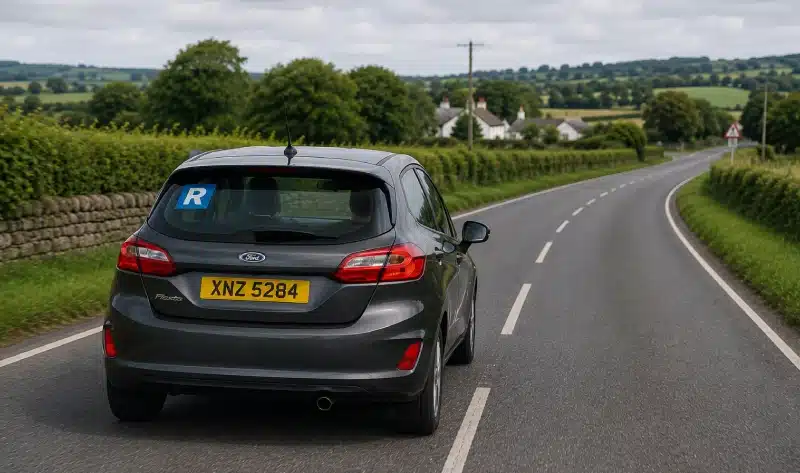
On 1 October 2026, Northern Ireland becomes the first part of the United Kingdom to introduce a full Graduated Driver Licensing (GDL) scheme. Whether you have a teenager about to learn to drive or you simply share the roads with people who do, it's worth understanding what actually changes and what doesn't.
GDL Applies Only in Northern Ireland
Northern Ireland will be the first part of the United Kingdom to introduce GDL. The UK Government has separately consulted on possible changes to the learning process in Great Britain, but the Northern Ireland GDL rules outlined here apply specifically to Northern Ireland. Some of the coverage circulating online has been written with a UK-wide audience in mind, which means parts of it don't reflect what is actually changing on Northern Irish roads.
What Changes Before the Test
The reform isn't only about post-test restrictions. GDL introduces significant changes to how learners prepare for their driving test in the first place.
New Category B car learners will be subject to a mandatory minimum six-month learning period before they can take their practical driving test. During that period, learners must work through a structured Programme of Training, recorded in an official Logbook. Modules cover core skills, hazard perception and real-world driving contexts, and must be signed off by an Approved Driving Instructor or supervising driver before the learner can sit their test.
The new practical driving test begins on 1 April 2027, six months after GDL is introduced. This reflects the six-month minimum learning period for new Category B learners entering the system from 1 October 2026.
The R Plate Is Changing, Not Disappearing
Northern Ireland already had an R plate system that doesn't exist elsewhere in the UK. Newly qualified drivers here have been required to display an R plate and observe a 45 mph speed limit for twelve months after passing their test.
Under GDL, the R plate period extends to two years, but the 45 mph restriction is removed entirely. Once qualified, R plate drivers can drive at the full posted speed limit on all roads, including motorways. The two-year period is split into two phases with different plates:
First 6 months
Blue R on a white background. Additional passenger restrictions apply during this phase.
Next 18 months
White R on a blue background. Full speed limit but the R plate must still be displayed.
Night-Time Passenger Restrictions
What applies during phase 1
For the first six months after passing, drivers under the age of 24 may not carry more than one passenger aged 14 to 20 between 11pm and 6am. Immediate family members are exempt. The restriction also does not apply where a qualified driver aged 21 or over, who has held a full licence for at least three years, is in the front passenger seat.
Six points and the licence is revoked
Under the Road Traffic (New Drivers) (Northern Ireland) Order 1998, any new driver who accumulates six or more penalty points within the first two years after passing will have their licence revoked. Breaches of the GDL rules attract penalty points and can push a new driver over that threshold quickly.
What if You Are Already Learning to Drive?
The rollout isn't an overnight switchover. There is a transition period for learners whose Category B provisional entitlement began before 1 October 2026.
How the transition works
Learners who already hold a provisional licence before 1 October 2026 can continue under the current system until 31 March 2027. If they pass their practical test during that window, they continue with the existing amber R plate for one year and the 45 mph restriction that goes with it.
If they have not passed their test by 31 March 2027, they become subject to the full GDL requirements from 1 April 2027 onwards.
Why This Matters Here Specifically
According to the Department for Infrastructure, in 2024, 164 people were killed or seriously injured in collisions where a car driver aged 17 to 23 was deemed responsible.
The figures help explain why rural driving, night-time driving and young passengers are important parts of the GDL evidence base. Department for Infrastructure statistics show that young drivers are disproportionately represented in serious collisions, while young passengers travelling with young drivers are particularly vulnerable during the hours covered by the new passenger restriction.
What This Means If You Have Been Injured
GDL creates a new set of obligations for newly qualified drivers, whether that's failing to display the correct plate or carrying unauthorised passengers after dark. A breach of those obligations doesn't automatically establish civil liability for a collision. Liability still turns on how the collision actually happened and what the evidence shows.
That said, a breach can be relevant to the circumstances a court examines, and it may inform how an insurer approaches the claim. If you or a family member have been injured in a road traffic accident in Northern Ireland, it's worth speaking to a solicitor who understands how these rules work in practice. Our road traffic accident team has been helping people across Northern Ireland pursue claims for decades.
Injured on Northern Ireland's roads?
A free consultation will tell you honestly whether you have a claim, including where a driver may have been in breach of the new GDL rules.