
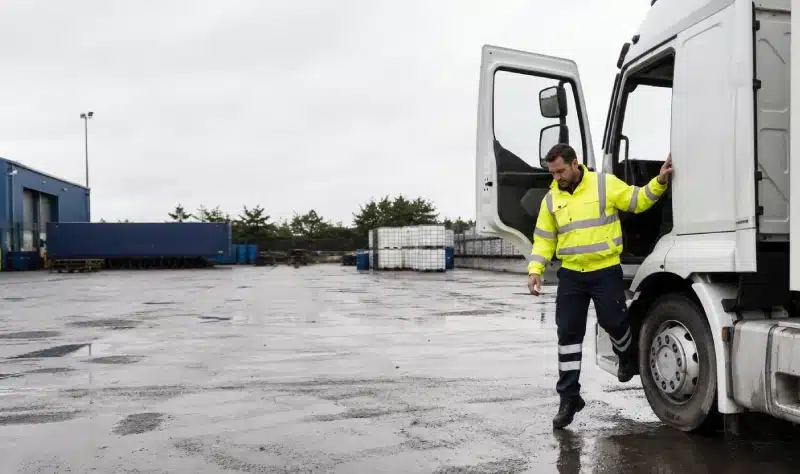
Slips, trips and falls can happen in almost any workplace, but the nature of haulage and logistics work exposes drivers and warehouse staff to a particularly wide range of hazards. HSENI has now made the sector a formal enforcement priority.
HSENI inspections are underway until March 2027
On 11 August 2026, HSENI announced a proactive inspection programme targeting slips, trips and falls in Northern Ireland's haulage and logistics sector. Inspections began in July 2026 and continue until the end of March 2027. Where significant risks are identified, enforcement action may follow.
Why HSENI Is Focused on Haulage
HSENI identifies slips, trips and falls as one of the most common causes of workplace injury in Northern Ireland's transport and logistics sector, with recent data showing they remain a significant source of reportable incidents. Injuries include fractures, sprains and head injuries, and workers can face lengthy periods off work.
The working environment helps explain why. A driver may move between a cab, trailer, loading bay, warehouse, transport yard and delivery premises during a single shift. Conditions can shift quickly with rain, ice, mud, diesel or oil. Employers need to consider the whole working environment, not only what happens behind the wheel.
The Five Main Hazard Areas
Getting in and out of vehicles
Vehicle steps become wet, muddy or contaminated. Handholds can be damaged, and poor lighting around parking areas makes it hard to see where feet are being placed. HSENI recommends maintaining three points of contact when climbing down and keeping steps and handholds clean.
Loading and unloading
Workers use load platforms and tail lifts, move between loading bays and handle equipment while close to raised edges and moving vehicles. Uneven surfaces, poor lighting and contamination make what should be routine tasks considerably more dangerous.
Wet or damaged transport yards
Northern Ireland's weather is a factor most of the year. Rain creates slippery surfaces; ice and snow add hazards in winter. Potholes, poor drainage, diesel spillage and unlit pedestrian routes are as common a cause of accidents as the weather itself.
Warehouse floors
Leaking equipment, spilled loads, cables, pallets, waste and damaged flooring all create hazards indoors. A small spillage or obstruction can cause a serious injury when a worker falls awkwardly.
Falls from vehicles
HSENI states falls from vehicles are among the most common accidents involving workplace transport. The first question is whether a worker needs to climb onto a vehicle at all. Where a task can be done from ground level, removing the need to work at height removes the risk.
What Employers Are Expected to Do
Employers in Northern Ireland must assess workplace risks and take reasonably practicable measures to prevent slips, trips and falls. The relevant legislation includes the Health and Safety at Work (Northern Ireland) Order 1978, the Workplace (Health, Safety and Welfare) Regulations (Northern Ireland) 1993 and the Management of Health and Safety at Work Regulations (Northern Ireland) 2000.
For haulage businesses, appropriate precautions typically include:
- Regular inspection and maintenance of yards, warehouses and loading areas.
- Prompt repair of potholes, damaged surfaces and defective vehicle steps.
- Adequate lighting throughout working areas, including around parking.
- Immediate cleaning of spillages and clear pedestrian routes.
- Suitable footwear provided where necessary.
- Training and supervision, particularly for new drivers and warehouse staff.
- Documented arrangements for ice, snow and adverse weather.
- Reviewing accidents and near misses to identify recurring hazards.
If You've Been Injured at Work
Your first priority is your health. Get medical attention, tell your employer, and make sure the accident is recorded accurately in the accident book. Where you can, preserve evidence of what caused the fall: photograph any contamination, defective surface or damaged equipment, and note the names of any witnesses. CCTV in yards, loading bays and warehouses is often decisive, so ask that any relevant footage is preserved.
If your injury was caused by a hazard your employer failed to control, you may be entitled to claim compensation. Examples include untreated spillages, damaged flooring, inadequate lighting, defective vehicle access equipment or an unsafe loading system. Compensation can cover the injury itself, loss of earnings, treatment costs and other associated losses.
Injured in a haulage or warehouse accident?
Our workplace injury team handles slip, trip and fall claims across Northern Ireland. Initial consultations are free and there's no obligation to proceed.