
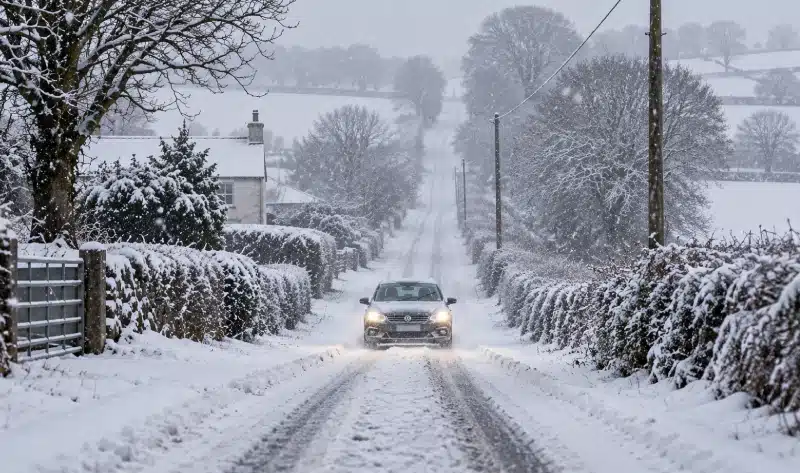
Driving in snow can be tricky, especially on the narrow, twisting roads found right across Northern Ireland. Even a short trip gets harder, so it's worth taking a few extra precautions.
Here are ten tips to help you handle winter driving like a pro, or at least get through it without too much stress.
1Check the weather and plan ahead
Before you head out, take a few minutes to check the forecast and road updates. If the journey isn't urgent, think about waiting until conditions improve. If you do need to travel, leave plenty of extra time so you're not rushing.
2Pack an emergency kit
Winter roads can be unpredictable, so keep a few essentials in the car. A de-icer and scraper, a torch, a warm blanket, snacks, water, a phone charger and a small shovel can make a big difference if you ever get stuck.
3Clear snow completely
Don't scrape a small patch off the windscreen and call it a day. Clear snow and ice from all your windows, mirrors and lights, and especially the roof. Snow sliding off your car can block your view or land in the path of other drivers.
4Slow down and drive smoothly
Gentle is the name of the game in snow. Avoid sudden moves like sharp turns or hard braking, as they can cause you to lose control. Accelerate gradually, use higher gears and keep your speed down to give yourself more time to react.
5Stick to main roads
Stay on main roads wherever you can. They are much more likely to have been gritted. Side roads and shortcuts might look tempting, but they are often untreated and can be harder going in snow.
6Leave more space
It takes far longer to stop on snow and ice. Leave plenty of room between you and the car in front so you have time to react if something unexpected happens.
Up to ten times further
The Highway Code for Northern Ireland warns that stopping distances in icy weather can be up to ten times greater than on a dry road.
7Stay calm if you skid
If your car starts to skid, it's easy to panic, but try to stay calm. Don't slam on the brakes. Ease off the accelerator and steer gently in the direction you want the car to go. On a hill, keep a steady pace so you don't lose grip or get stuck.
8Make yourself visible
Winter weather often means poor visibility. Use dipped headlights so other drivers can see you, and switch them on whenever visibility drops. Before setting off, check all your lights are working and clear of snow and ice.
9Watch for hidden hazards
Snow can hide potholes, icy patches and debris. Take extra care on shaded stretches and bridges, which tend to freeze before other parts of the road.
10Look out for farm vehicles and livestock
Tractors and farm machinery may be moving even more slowly than usual in slippery conditions. Watch for signs warning of farm entrances or livestock, especially on rural roads. Slow down on the approach to bends and hill crests where you can't see far ahead, and be ready to stop.
Need support after an accident?
If you've been injured in an accident this winter that was someone else's fault, our friendly team can explain your options and guide you through the process.