
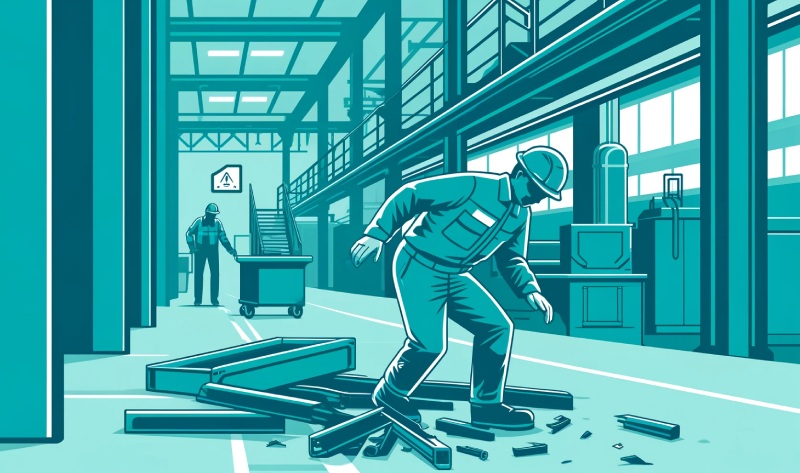
After an accident at work, reporting it to your employer is one of the first things that matters. It is also one of the simplest steps to miss when you are shaken, in pain, or worried about raising a fuss.
This piece explains why reporting matters, what employers in Northern Ireland are required to do, and what your options look like if the accident was not reported at the time.
Why Reporting Matters
Any injury at work, from minor to serious, should be recorded in your employer's accident book. Prompt reporting matters for three practical reasons.
A written record
The accident book entry becomes the record of what happened. Where a claim is later made, that entry is one of the first documents an insurer will ask for.
Putting the employer on notice
Employers are required to take steps to address hazards. A reported accident, or even a near miss, is often what triggers that review.
Pay and benefits
Access to statutory sick pay and other work-related benefits tends to be smoother when the accident is already on record from the start.
What Employers Are Required to Do
Under the Health and Safety at Work (Northern Ireland) Order 1978, employers in Northern Ireland have a duty to provide a safe working environment and to respond when accidents occur. In practice, that includes clear procedures for accident reporting, first aid provision and health and safety training.
Who records the accident?
Once an accident is reported, it is the employer's responsibility to record it in the accident book. You are entitled to ask to see what has been written and to take a copy of your own entry.
How the Report Supports a Later Claim
Reporting creates a clear record of the event. That record matters if you later need time off to recover or decide to pursue a claim. If the accident was caused by employer negligence, such as faulty equipment or inadequate training, the accident book entry is important evidence.
The details you provide, including date, time, location, cause, witnesses and the injuries you sustained, often shape the case that follows. Where a report is incomplete, or the account on file does not match what actually happened, the gap is usually something that needs to be addressed later.
What If the Accident Was Not Reported?
Delaying or failing to report an accident makes a later claim harder, but not impossible. If the accident was not reported at the time, Paschal O'Hare Solicitors can still help. The firm has worked on work accident claims across Northern Ireland since 1969, and late-reported cases are a regular part of that work.
What to Do After a Work Accident
The hours after a work accident can be stressful. The following steps are the ones that tend to matter most.
-
Get medical attention See a doctor or go to A&E depending on how serious the injury is. The medical record is often as important as the accident book.
-
Report the accident Tell your supervisor or line manager and ask to see the accident book entry. Keep a copy of what has been written.
-
Take photographs where you can Photograph the scene, any damaged equipment and any visible injuries, before anything is moved, repaired or cleaned up.
-
Keep records of everything that follows Medical appointments, time off work, expenses, and any correspondence with your employer about the accident.
How Paschal O'Hare Solicitors Can Help
We handle work accident claims across Northern Ireland. Our team assists with gathering evidence, instructing medical experts and negotiating with employer insurers, so you can focus on recovery while the case is run.
If you have questions about a potential claim
Our team is happy to go through them in a free initial consultation. We will explain honestly whether the circumstances are likely to support a claim and what the next steps would be.
Injured at work in Northern Ireland?
Whether or not the accident was reported at the time, a free initial consultation will tell you honestly where you stand and what evidence will matter.