
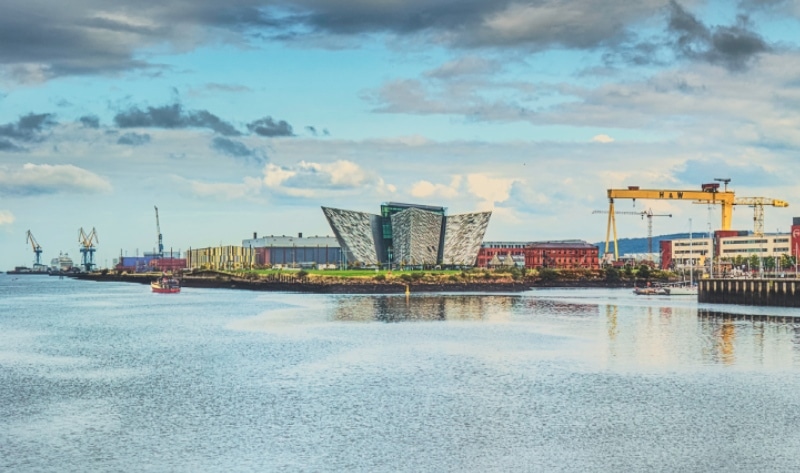
Northern Ireland's ports never really stop. At Belfast Harbour, Larne, Warrenpoint and Foyle Port, cargo is loaded and unloaded around the clock, often in the dark, the wind and the rain. Heavy loads swing overhead, vehicles move constantly and the edge of the quay is never far away.
Most shifts pass without trouble. But when something goes wrong on a dock, the injuries are often serious. Here are the most common causes of dock accidents, and what you can do if you've been hurt.
✓Reviewed by Patrick O'Hare, Managing Partner, Paschal O'Hare Solicitors
Slips, trips and falls
Quaysides, ramps and ship decks are often wet, oily or icy, and they're cluttered with ropes, lashings and equipment. Combine that with poor lighting on a night shift and it's easy to lose your footing.
Falls from ladders, gangways and ship decks are a particular risk, especially in bad weather or when you're carrying something and can't keep a hand free.
Falling and swinging loads
Cargo, containers and crates are lifted and lowered all day. If a load isn't secured properly, a sling fails or a crane driver's view is blocked, anything underneath is at risk. Loads can also swing in strong wind, catching people who think they're standing clear.
Lifting operations should be planned and supervised, with exclusion zones so nobody works under a suspended load.
Vehicles and plant
Forklifts, straddle carriers, cranes, tugs and lorries all share busy, noisy spaces with people on foot. Blind spots, reversing vehicles and tight turns between stacked containers cause many of the worst dock accidents.
Ports should separate vehicles and pedestrians wherever possible, control traffic routes and make sure drivers are trained. High-visibility clothing helps, but it isn't a substitute for a safe layout.
Working at height
Climbing onto container stacks, working on ship decks or carrying out maintenance high up all carry a risk of falls, which get worse when surfaces are wet or icy. Guard rails, harnesses and safe access should be in place before anyone goes up. Shortcuts taken to keep a ship on schedule are often where things go wrong.
Cuts, crush injuries and snapping lines
Heavy machinery, sharp edges and moving parts can cause deep cuts, crush injuries and, at worst, amputations. Mooring lines, chains and wires under tension are a hidden danger. If one snaps, it can whip back with enough force to cause serious injury. Proper protective equipment and regular inspection of lines and gear reduce the risk.
Your employer's responsibilities
Your employer has a legal duty to take reasonable care for your safety at work. On the docks, that means assessing the risks, planning lifting operations, controlling vehicle movements, protecting against falls, maintaining equipment and giving you proper training.
Who is your claim against?
Dock workers are employed in different ways: directly by the port, by a stevedoring company, by a contractor or through an agency. Your claim is usually against your employer, but another company working on the same site may also be responsible if their actions caused your accident. Most employers must by law have employers' liability insurance, so claims are usually paid by an insurer.
Your questions about dock accident claims
Can I claim if I was injured working on the docks?
Possibly. If your employer or another company on site failed to take reasonable care and you were injured as a result, you may be able to claim. It depends on how the accident happened and the evidence available.
What if the accident was partly my fault?
You may still be able to claim, although your compensation could be reduced to reflect your share of the blame.
How long do I have to make a claim?
You generally have three years to issue court proceedings for a personal injury claim in Northern Ireland. The three years usually run from the date of the accident, or from when you first knew about your injury and its link to work, if that's later.
How we can help
Paschal O'Hare Solicitors has helped injured workers across Northern Ireland since 1969. If you've been hurt on the docks, we'll look into what happened, explain your options and deal with the legal side while you focus on your recovery.
Injured working on the docks?
Talk to our team in Belfast, Glengormley or Carrickfergus about what happened and whether you may have a claim.