
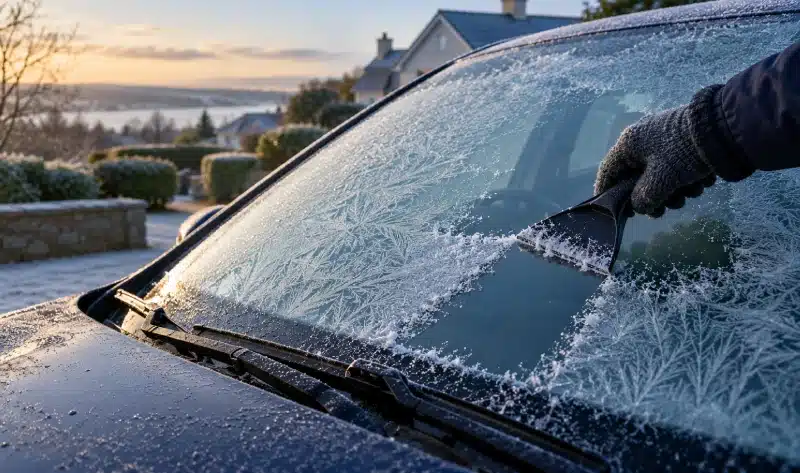
Frosty mornings are part of winter in Northern Ireland. You’re running late, the windscreen is white over, and it’s tempting to scrape a small patch, put the heater on full and go. Clearing the whole car takes a few more minutes, and it protects you and everyone else on the road.
Ice on your windows cuts your view of the road
Ice forms quickly on the windscreen, side windows and mirrors. Drive off before it has cleared and you may miss a car pulling out of a side road, a cyclist in your mirror or someone stepping onto a crossing. The side windows matter as much as the windscreen when you’re looking left and right at a junction.
For condensation inside the glass, read our guide to preventing misted car windows.
Icy roads leave less room for error too.
Stopping distances on ice can be ten times greater than on dry roads.Highway Code for Northern Ireland, rule 230
Add poor visibility and a collision becomes more likely, with a real risk of serious injury.
Leave a few extra minutes on frosty mornings. Keep an ice scraper and de-icer in the car so you’re not left scraping with a bank card.
Driving with iced-up windows can break the law
Rule 229 of the Highway Code for Northern Ireland sets out what to do before you drive in icy weather. It starts with this:
You must be able to see, so clear all snow and ice from your windows.
The Code uses “must” for rules backed by law, and breaking one is a criminal offence. You could face a fine or penalty points.
Before you set off
Rule 229- Clear all snow and ice from your windows. Legal requirement
- Make sure your lights are clean and your number plates are readable. Legal requirement
- Clear your mirrors and de-mist the windows.
- Remove snow that could fall into the path of other road users. Snow left on the roof can also slide down over your windscreen the first time you brake.
Rule 228 advises against driving in icy or snowy weather unless the trip is essential. If you do need to go, allow more time and carry an emergency kit. The Code suggests:
- De-icer
- Ice scraper
- Torch
- Warm clothing and boots
- First aid kit
- Jump leads
- Shovel
- Warm drink
- Emergency food
If another driver’s frozen windscreen caused your accident
If you’ve been hurt in a collision and the other driver hadn’t cleared their windows, their poor view may have caused or contributed to the crash. Setting off without being able to see properly may mean they failed to take reasonable care, which is the basis of a negligence claim.
You may be able to claim compensation for your injuries, damage to your vehicle, lost earnings and other costs caused by the accident. Whether you have a claim depends on what happened and the evidence available.
Photograph the other car’s windows
If it’s safe to do so, take a photo at the scene. Ice melts quickly once an engine is running, and your photo may be the only record of it.
Clear your own car too
If your windows weren’t clear, the other side may argue you were partly to blame, and that could reduce your compensation. Before your next frosty start, give the whole car a proper scrape.
Injured in a collision on Northern Ireland’s roads? See how a claim works.
Road traffic accident claimsHurt in a winter accident?
Paschal O’Hare Solicitors has helped people across Northern Ireland since 1969. Contact our offices in Belfast, Glengormley or Carrickfergus for a free initial consultation. We’ll listen to what happened and explain your options in plain English.